

San Francisco Bay Area News
Celebrate International Jazz Day in the Bay Area- Sunday, April 30
 Though the Global Concert takes place in Old Havana, Cuba, you can still be part of the scene in the Bay Area. (Here’s a trailer introduced by Herbie Hancock in anticipation of The International Jazz Day Global Concert 2017). Listed below are celebrations around the Bay that are currently registered on their website, but there are probably many more jazz events going on locally.
Doc’s Lab 124 Columbus Avenue in San Francisco
- Electric Squeezebox Orchestra with Saxophonist Harvey Wainapel. Celebrate International Jazz Day at this benefit for the SOTA (School of the Arts) World Music + Dance and Latin Band. Proceeds will help 37 students travel to Havana this June. SOTA is the nation’s only public high school program with hands-on world music ensembles. Opening will be the SOTA Latin Band under the direction of Henry Hung. Followed by Electric Squeezebox Orchestra with Harvey Wainapel. (415) 649-6191 $20 Showtime: 2:30pm
The Chapel 777 Valencia St. in San Francisco
- Mattson 2 perform A Love Supreme. In an international and inter-dimensional exclusive, for the first time anywhere, Mattson 2 perform John Coltrane’s 1965 masterpiece “A Love Supreme” in it’s entirety to celebrate International Jazz Day. Featuring the legendary Money Mark, and Tommy Guerrero + DJ sets by Jordan Blackmon (Toro Y Moi), this will be a spectacular and unique event honoring one of the landmarks of 20th century music. Mattson 2 will perform the album in full and also a set of special Mattson classics. “If you could soundtrack the jangle of the sea and the jazz of the surf, The Mattson 2 would most certainly be the composers. The identical twin guitar and drums duo are truly a marvel of jazz-rock orchestration and arrangement.” (website) $16 adv/$20 door. Show begins at 8pm.
The Village 1099 Sunnydale Ave. in San Francisco
- The Village celebrates on Sat., Apr. 29th – the eve of International Jazz Day for an afternoon of community members’ poetry/spoken word readings accompanied by virtuoso jazz saxophonist Madaline “Mad” Duran. There will also be a special guest performer – American virtuoso jazz guitarist, maestro Eddie Duran. The couple combines their material from the 1940s age of bebop composition, jazz from the 1950s and their favorite Latin rhythms. Doors open for community reception, appetizers & beverages at 1pm and the Poetry/Jazz Program begins at 2pm. This is a free family event!
Marcus Books 3900 M.L.K. Jr Way in Oakland
In honor of International Jazz Day, Elizabeth Pepin Silva and Lewis Watts will be speaking and signing books to celebrate the launch of the Harlem of the West SF Project. The HOTWSF Project is a book, website and photographic exhibit that features the bustling San Francisco Fillmore jazz era of the 1940s and ’50s, a period when the area was a vibrant neighborhood of more than two dozen nightclubs and music venues. The project focuses on a unique chapter of almost unknown West Coast jazz history. The event starts at 3pm. More information: (415) 640-5994
KCSM-Jazz91.1 on your radio throughout the Bay Area broadcast from San Mateo
On Apr. 30 KCSM offers up 24 hours of Jazz history, profiles of musicians, documentary shorts & music, music, music curated throughout the day by veteran programmers Clint Baker, Alisa Clancy, Keith Hines, Clifford Brown Jr., Chuy Varela, Carl Sonny Leyland, Richard Hadlock, Harry Duncan and Ron Pelletier. You can listen live. Just scroll down and choose your media platform.
Now, if you don’t want to go out on International Jazz Day, you can watch the global concert live. Three hours ahead of us. Slated to start at 8pm there and 6pm here.
About International Jazz Day
 In November 2011, the United Nations Educational, Scientific and Cultural Organization (UNESCO) officially designated April 30 as International Jazz Day in order to highlight jazz and its diplomatic role of uniting people in all corners of the globe. International Jazz Day is chaired and led by Irina Bokova, UNESCO Director General, and legendary jazz pianist and composer Herbie Hancock, who serves as a UNESCO Ambassador for Intercultural Dialogue and Chairman of the Thelonious Monk Institute of Jazz. The Institute is the lead nonprofit organization charged with planning, promoting and producing this annual celebration.
International Jazz Day brings together communities, schools, artists, historians, academics, and jazz enthusiasts all over the world to celebrate and learn about jazz and its roots, future and impact; raise awareness of the need for intercultural dialogue and mutual understanding; and reinforce international cooperation and communication. Each year on April 30, this international art form is recognized for promoting peace, dialogue among cultures, diversity, and respect for human rights and human dignity; eradicating discrimination; promoting freedom of expression; fostering gender equality; and reinforcing the role of youth in enacting social change.
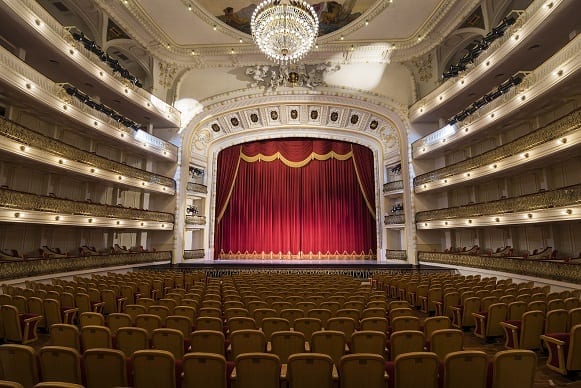
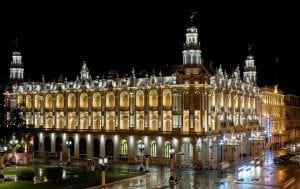
Each year this global event takes place in a landmark venue with rich historical significance both to the hosting city and nation. Last year Washington, D.C. served as the International Jazz Day 2016 Global Host City. President Barack Obama and First Lady Michelle Obama hosted the International Jazz Day All-Star Global Concert at the White House. This year the All-Star Global Concert will take place in the historic Gran Teatro de la Habana Alicia Alonso, one of the world’s leading performing arts centers and the oldest theater in Latin America. Originally built in 1838 as the Teatro Tacón, it has undergone an extensive restoration to continue presenting top performers from around the world, currently housing the National Ballet of Cuba and the Havana International Ballet Festival. The stage is set now to welcome the global community of performers of International Jazz Day 2017. If you don’t want to go out, you can always watch it live. (three hours ahead) Slated to start at 8pm there and 6pm here.
The 2017 All-Star Global Concert will feature more than 50 renowned artists representing 14 countries, including Ambrose Akinmusire (United States), Carl Allen (United States), Melissa Aldana (Chile), Francisco “Pancho” Amat (Cuba), Marc Antoine (France), John Beasley (United States), Richard Bona (Cameroon), Till Brönner (Germany), A Bu (China), Igor Butman (Russian Federation), Bobby Carcassés (Cuba), Regina Carter (United States), Kurt Elling (United States), Roberto Fonseca (Cuba), Kenny Garrett (United States), Herbie Hancock (United States), Antonio Hart (United States), Quincy Jones (United States) Takuya Kuroda (Japan), Ivan Lins (Brazil), Sixto Llorente (Cuba), Marcus Miller (United States), Youn Sun Nah (Republic of Korea), Julio Padrón (Cuba), Gianluca Petrella (Italy), Gonzalo Rubalcaba (Cuba), Antonio Sánchez (Mexico), Christian Sands (United States), Esperanza Spalding (United States), Chucho Valdés (Cuba), Ben Williams (United States), Tarek Yamani (Lebanon), Dhafer Youssef (Tunisia), and more!
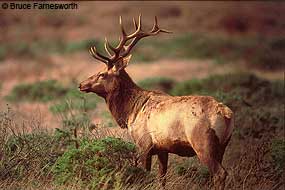 remained. One pair was discovered by a local game warden near Buttonwillow, and nurtured to save the species. In 1977, seven elk were reintroduced to their former native habitat at Grizzly Island in Solano County. Since then, this herd has not only flourished, but provided seed stock for CDFW to establish new herds. Statewide, tule elk populations have expanded to 5,100 animals in 21 herds.

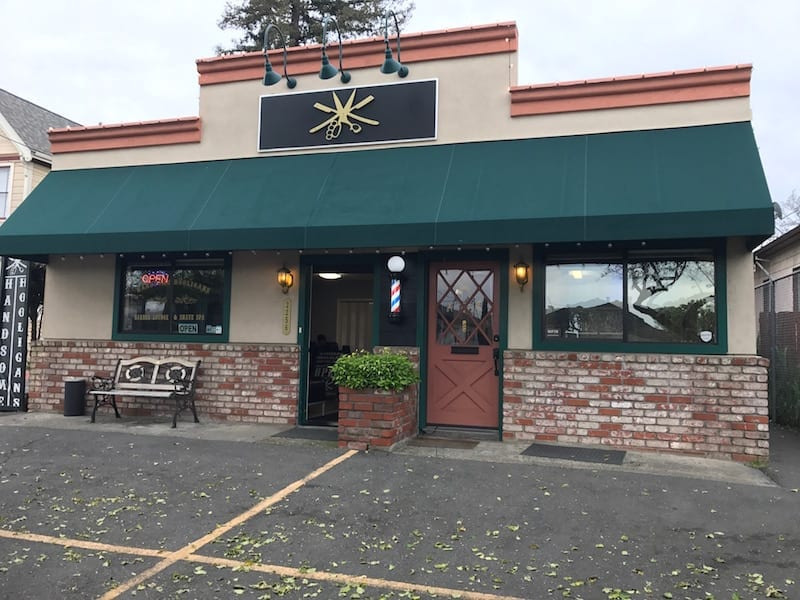
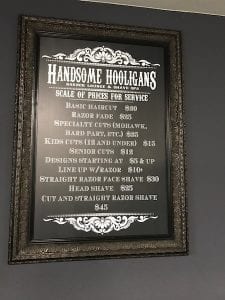 When it’s time to drop your car off at Big O for new tires, but you don’t want to sit around in the waiting room perusing the dusty old Motor Trend magazines; just walk across the street and get a haircut. Or just hang out and talk with the owners or sharpen your billiards skills. You can do it all at
 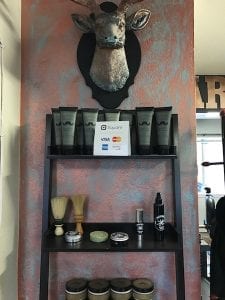 shop with a modern twist. “We wanted that old school approach for the shop, but with a modern attitude,” says James Martinez, co-owner and barber. After many years working for other people, he and his cousin Armando Ortiz decided to open their own shop and they now have four more barbers working with them.